Ranges
Overview
A study in computer vision and game theory: a macOS assistant that reads a poker table from screen captures and suggests the move.
Stack
Python, Rust, Gemini vision, Claude (benchmarks only), macOS screen capture
What I built
- Calibrated screen capture: the table regions are cropped, combined into one image and sent to a vision model that returns the table state as JSON.
- Local checks on what the model reads: card backs, the dealer button and the pot are verified from the pixels before anything is decided.
- Exact preflop decisions from cached solver charts, looked up rather than computed.
- Heads-up postflop spots solved by a pinned Rust solver, with an optional remote solve server for heavier spots.
- Offline benchmarks that score Claude Haiku and Sonnet against the exact solver, with paid model calls off by default.
Key decisions
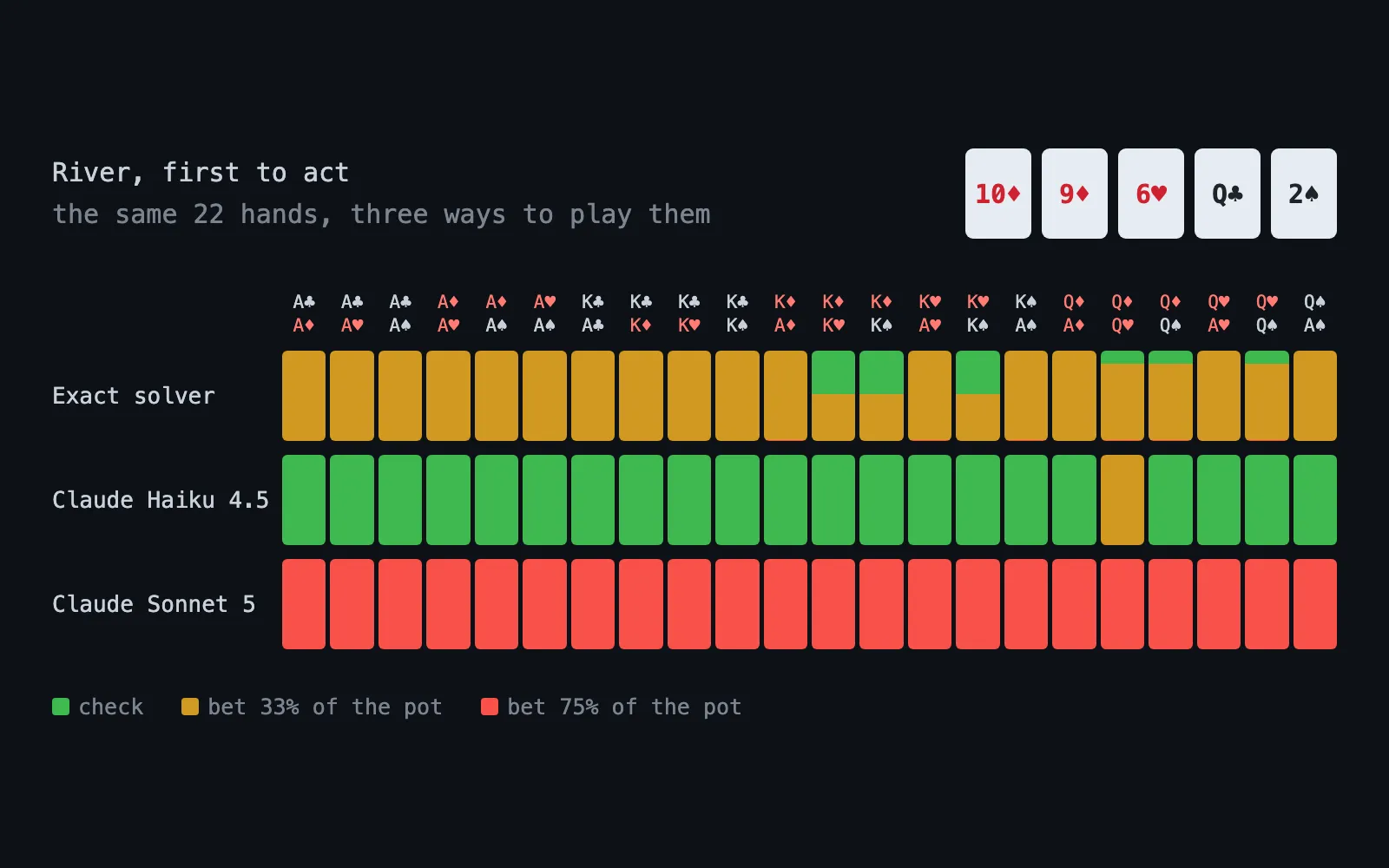
- The first version asked the model for the move, and it failed. Benchmarked against an exact solver, Claude Haiku and Sonnet collapsed to almost constant actions: on one river spot one checked 21 of 22 hands and the other bet all 22, and on 100 cases they matched the solver only 57 to 61% of the time.
- So the model now only reads the table, and the move is computed from verified solver data. In strict mode no language model is ever asked for the move.
- Fail closed: when a spot is unsupported or only approximate, it says so instead of guessing.
A study project, not meant for live play where room rules forbid assistance.